
In the dynamic environment of industrial welding, the shape of acceptable fume extraction MIG torches has shifted out of the margins of safety, to the center of technical choice, which can influence productivity, regulatory observance, and long term operational viability.

This paper investigates the complex technical issues that the welding workers have to consider when choosing fume extraction MIG torchs, going beyond their simple specifications to learn how the tools are incorporated into the overall working systems, regulatory standards and emerging workplace safety paradigms. As it has been analyzed, a successful implementation must be performed in a holistic direction, whereby the torch and its usage in relation to the vacuum systems, operational processes, and the particular requirements of the application are put into consideration, which ultimately proves that the correct fume extraction solution can result in the improvement of safety, productivity and the satisfaction with the workplace at the same time.
Understanding the Fundamental Technology
Fume extraction MIG torches are a complex combination of welding technology and industrial hygiene engineering. In comparison with standard welding torches that merely provide current and shielding gas to the arc, the specialized tools have an inbuilt vacuum system that traps fumes that are hazardous at their source. This built-in grabbing system is an important improvement of the old-fashioned methods of extracting, which normally include placing external hoods or arms around the welding region. The technicality behind the use of the gun is that it is able to maintain the optimum welding conditions and at the same time, form enough vacuum pressure to remove the fumes without interfering with the essential shielding gas envelope that helps keep the weld pool free of atmospheric contamination.
The technical problem that engineering firms have solved is to find a balance between a set of conflicting needs: the extraction velocity required is high enough to collect small particles of particulate matter, the interface should not interfere with the manual dexterity of the welder, it must be compatible with the available sources of power and wire feeders, and should be able to withstand harsh industrial operation. Contemporary fume extraction guns have been developed to overcome such difficulties in the form of new designs that incorporate customizable extraction controls, improved nozzle geometry, and materials that resist temperatures of constant welding processes.
Critical Technical Specifications and Their Implications
In the process of assessing fume extraction MIG guns, some technicalities have specifications that must be observed attentively. Amperage rating is perhaps the simplest parameter and most industrial ones have a range of between 300 and 600 amps. But it should be interpreted in context: a gun rated at 400 amps constant operating should not be expected to operate at the same rate when used in intermittent high-amperage operation, and the interaction between amperage rating and extraction efficiency should be given specific consideration. The increased amperage welding generally produces larger amounts of fume and varied composition of particulate matter and requires extraction systems that are able to sustain the volume of airflow requirement without interfering with the welding operation.
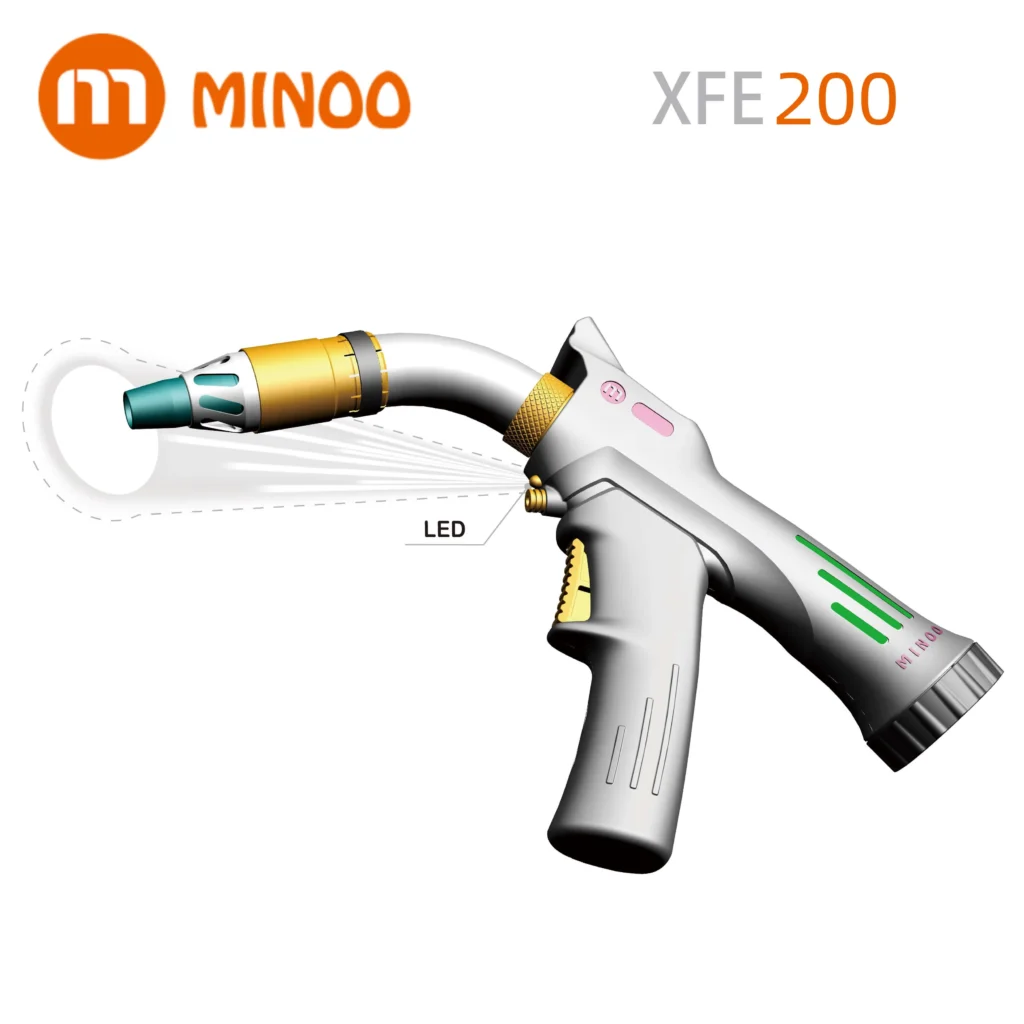
Wire compatibility is another important factor which is not constrained to a mere matching of diameter. Various types of wire solid, flux-cored and metal-cored exhibit different fume properties and amounts. A special case such as aluminum welding also poses challenge because of the various fume composition and the requirement of special liners which avoids problems of feeding wires. Internal parts of the gun should be in conformity to the type of wire currently being utilized, especially the liner materials, the shape of contact tips and gas diffusion systems which can be tailored to certain welding operations.
Much attention should be paid to extraction efficiency metrics because manufacturers can adopt alternative testing methodologies and reporting standards. The true extraction efficiency is determined by measuring the percentage of fumes collected and also the particle size distribution of the collected material. The existence of dangerous agents such as hexavalent chromium and manganese oxides in sub-micron particle sizes is also a key difficulty to capture systems. An ideal reference to professional requirements should be based on the adherence to developed standards in such organizations as ACGIH, OSHA, and CCOHS, and should present applicable performance values instead of widespread statements.
Integration with Vacuum Systems: A Critical Partnership
The functionality of any fume extraction MIG gun is reliant essentially on how well it is matched with the backing up vacuum system. This correlation is one of the most neglected factors in the choice of the system. The gun is actually a specialized nozzle in a larger extraction system, and its efficiency depends on the ability to attain the proper balance between vacuum pressure and the airflow volume. There are large differences in what industrial vacuum systems can do with high-vacuum systems being particularly tailored to source capture operation unlike medium-vacuum systems of flexible extraction arms.
Technical compatibility does not just refer to simple connection fittings only but covers the whole airflow dynamics of the system. The geometry of the gun produces certain resistance properties to the vacuum system that should be overpowered to enable proper extraction to take place. Vacuum specifications are usually given by manufacturers but these are to be confirmed by experimental testing with the actual arrangement of the equipment that is intended to be used. This is especially important when there is the issue of system scalability: numerous extraction guns on a centralized vacuum system have to be carefully calculated in terms of cumulative airflow requirements and pressure drops along the distribution paradigm.
Another integration factor that has an effect on the operational efficiency in the long run is filter system compatibility. The fumes that are captured have a certain character of particulate matter depending on the materials that are welding. In the case of stainless steel welding, hexavalent chromium which is usually 0.05 to 2.0 microns in size is produced and this requires high-efficiency filtration to trap these toxic elements. Extraction efficiency of the gun is coupled with the capabilities of the filter system and it forms a complete containment solution and cannot be considered separately but as a system.
Ergonomic and Operational Considerations
Technical specifications do not suffice to define the appropriateness of fume extraction MIG gun to certain applications. Human factors of the welding operations should be considered on the same level as even the most technologically developed system will be useless when the welders consider it to be clumsy or lack of freedom. The fume extraction guns being used today have gone a long way in ergonomics with the manufacturers minimizing the size and weight of the vacuum chambers and better the handle geometries and balance to ensure that the operator is not exhausted when having to work at lengthy sessions of welding.

Manueverability of the gun and access to the joints are important operation factors that differ remarkably across models. The various neck designs, flexibility of cables and the total weight distribution influence the capability of the welder to have accurate arc control in tight areas or in laboring on intricate designs. Other high-end models have rotating necks or adjustable angles that contribute to better accessibility without affecting the extraction efficiency. The considerations of these design elements should be made in terms of the particular application requirements because what would be a good gun in the flat-position welding in open fabrication could be not practical in overhead operations in a shipyard or structural steel construction.
The ease of maintenance and replacement of consumable procedures affect long term operating efficiency and total cost of ownership. Technical designs which enable fast liner change, cleaning of nozzle, components inspection minimizes downtime and promotes good maintenance habits. Its portability to disassemble and reassemble, exchangeability, and readability of maintenance documents are all beneficial in the context of its practicality in the industrial environment where the reliability of the equipment has a direct impact on the production schedule.
Regulatory Compliance and Safety Standards
Regulatory conditions in the field of welding fume exposure have changed considerably over the last few years, as organizations such as OSHA have introduced more strict permissible exposure limits of dangerous substances. Fume extraction MIG guns are a proactive compliance strategy, but the effectiveness of these needs to be proven by the data of performance measurements. Specific regulatory standards are supposed to be referred to in technical specifications, and they ought to include testing documentation which substantiates the claims of compliance.
The various uses pose different regulatory problems depending on the material being welded. In the case of stainless steel welding, hexavalent chromium is produced and has certain exposure limits and monitoring requirements. These regulatory requirements should be met by the technical capability of the fume extraction guns where special care should be taken on the efficiency of extraction of the particular hazardous substances depending on the application of the gun. Tests in conditions close to those of actual use should be documented, such as multiple welding positions, types of wire, and amperages, among others.
In addition to fundamental regulatory compliance, high-end fume extraction systems play a role in more comprehensive programs of workplace safety, including health, retention, and productivity among employees. An effective fume control should be implemented at the technical level, which will be an investment in human capital, and this decrease of exposure-related health problems and the establishment of a workplace environment such that welding professionals are attracted. This fact gives consideration to the technical evaluation further than mere equipment specifications to the role of the gun in overall safety management systems.
Application-Specific Technical Requirements
Depending on the requirements in certain application, the technical suitability of fume extraction MIG gun is very different. Varied industries and welding operations pose special challenges which require special solutions. Applications in robotic welding, such as the extraction systems, must be designed to be part of automated equipment, and must not interfere with the current tool path or program. Robotic application technical issues vary significantly between manual welding and technical issues are rhyme and consistency of performance between repetitive tasks and compatibility with robotic interface standards.

Applications where heavy fabrication and shipbuilding are used tend to use large-duty cycles of guns, longer welding periods, and be used in harsh environments. The technical requirements should consider the unremitting running at the increased amperages, and the thermal control and durability of the elements should be considered in detail. In contrast, maintenance and repair operations might focus on flexibility and manoeuvring over maximum duty cycle and other technical priorities might be used to select them.
The welding of aluminum has certain technical issues because of the various thermal properties of aluminum and steel, the use of special wire feeding system, and the fume composition. Guns used to extract fume in aluminum applications are required to take account of these differences using the right liner materials, improved gas flow dynamics, and aluminum fume specific extraction equipment. Such application specific factors should be taken into consideration during the technical evaluation as opposed to using generalized performance assertions.
Cost Considerations and Total Ownership Analysis
Fume extraction MIG guns are to be evaluated technically not only at the initial acquisition costs but also at the overall cost of ownership through the entire life cycle of the equipment operation. This is a holistic analysis taking into account a number of tied factors: consumable cost and replacement rates, maintenance rates and workload, energy usage of external vacuum systems and possible productivity changes. Technically superior gun at higher initial cost can have lower total ownership costs due to less consumption of consumables or longer service intervals or more productive welding.
The interaction of technical requirements and operational performance has some economic consequences which should be analyzed. Such features as a range of adjustable extraction controls that maximize the use of the vacuum according to the conditions of the welding can save a lot of energy in the long-term. In like manner, the designs which have low resistance within the extraction route will decrease the workload of the vacuum system, which might increase the filter life and decrease the frequency of maintenance. These technical features are directly converted into economic advantages that could be used to offset increased initial investment.
The most important economic consideration, which is usually undervalued when conducting a technical evaluation, is represented by productivity impacts. Arc-on time and quality of welding can be improved with a well-designed fume extraction gun that helps to increase the comfort of the welder and eliminate fatigue. Time saved in moving external extraction hoods is a direct productivity benefit, which will add up in thousands of welding hours. Features such as ergonomic designs, low-maintenance, and compatibility with the current workflows have technical features that have a particular importance on the evaluation process.
Future Trends and Technological Evolution
Fume extraction MIG guns are continually in development in regards to the developing materials science, new regulation requirements and new industrial demands. There are a few trends which should be considered when considering the existing equipment in terms of long term appropriateness. The implementation of intelligent technologies and monitoring features is a trend of further evolution, some of the modern systems being provided with sensors to monitor the extraction efficiency, filter status, and maintenance demands in real-time.

Continued material developments have been able to make components more durable and functional with the liner materials, a nozzle coating and cable designs increasing the life of the service and making them more reliable. The continuous improvement of more efficient vacuum systems using less energy and offering better filtration options has an impact on the technical requirements of compatible extraction guns and presents the possibility of better system integration and optimization of performance.
Regulatory evolution is also another source of technical innovation, since the shift in exposure limits and monitoring requirements promotes the creation of more efficient extraction technologies. The growing awareness of certain dangerous materials such as manganese and hexavalent chromium has seen specific efforts in improving the extraction performance of these materials and technical specifications themselves are starting to mention performance in relation to certain regulatory metrics instead of making generalized claims of efficiency.
Implementation Strategy and Best Practices
The technical specification must go beyond just the technical specifications of the fume extraction MIG guns to a strategic implementation that entails more than technical specifications alone. Early testing must involve practical testing with real-life welding equipment and material within the conditions that are likely to be used in real life. This is a pragmatic trial that gives more insight into the published specifications and how the gun can be effective in a particular application and how it fits with the current workflows.
Training is one of the implementation elements that are important and have a direct impact on technical performance. The welders not only have to know how to use the equipment, but also how to ensure maximum extraction efficiency by ensuring the gun is in the right position, is maintained, and adjusted to the extraction controls appropriately. Ease of use attributes that are technical in nature make operations and maintenance more stable with time, which makes it less likely that improper usage will reduce the effectiveness of extraction.
The continuous monitoring and maintenance measures are used in order to maintain the technical performance similar during the service life of the equipment. Checking the extraction efficiency, the condition of the filter, and the wear of the components on a regular basis can help to detect the problem before it impacts performance or compliance. These maintenance activities should be provided with technical documentation in the form of well defined procedures, recommended maintenance intervals, and troubleshooting advice on the frequent problems.
Summary: The technical holistic view
The choice of fume extraction MIG guns is a complicated technical choice, which implies the need to balance a number of interdependent factors rather than an easy matching by specifications. The implementation requires an interdisciplinary approach where the gun is viewed as a part of the bigger system, which includes vacuum equipment, filtration technology, workflows, and regulatory needs. The technical test should not be limited to the fundamental amperage ratings and wire compatibility and run into a more subtle test of ergonomic design, serviceability, and long-term efficiency of the operational functionality.

The current technology of extraction of fumes has improved a lot and the solutions provided will not only increase safety, productivity and workplace satisfaction, but will also do that in a manner that increases satisfaction among the people that will be working there. The best methodology is the critical examination of particular application requirements, testing in authentic circumstances and the overall ownership cost as opposed to the original purchase cost. This holistic technical view allows welding operations to put in place fume extraction solutions that bring about sustainable returns in the metrics of safety, compliance, and operational performance.
Finally, the technological advancement of modern fume extraction MIG guns can be viewed as an opportunity, as well as a task, of the welding professionals. The future is seen in the opportunity to use the advanced technology to make the workplaces safer and more productive. It is the duty of proper assessment, effective execution, and maintenance so as to make sure that such technical competencies are converted to practical gains over the service life of the equipment. With the ever-changing nature of the welding technology, this mixed state of technical check and use will be critical to ensure the highest output using the fume extraction systems.