
Robot welding systems have been a necessity in the manufacturing process as far as efficiency and accuracy is concerned due to the fast changing environment in the world of industrial automation. Nevertheless, the nature of robotic welding processes itself poses a collision risk, which can result into a massive downtime, damage of equipment and safety risk. The paper is about detailed approaches to the prevention of collision damage of the robot welding torch and discusses both the technical options and the principles of the work that make the reactive maintenance a proactive protection. Manufacturers can also reduce the number of crashes by a large margin by using a holistic approach, which involves the integration of high-end technology, adequate training, and planned maintenance procedures to maximize robotic welding investments due to long-term reliability and productivity.

Understanding the Collision Threat Landscape
Crash wounds in robotic welding machines are not merely a simple physical facet of the equipment blunder, but a significantly more intricate circumstance of the mechanical constraints, the accuracy of computer programmes, and the primary dynamics between man and robot. The most vulnerable and vulnerable part of the robotic system is the welding torch, which is subject to numerous collision risks, which may have different origins. These are unforeseen impediments in the way of the robot, errors in programming that cause movement conflicts, mechanical breakdowns in positioning and even human error in maintenance or operation.
Contemporary collaborative robots (cobots) have come with advanced collision detection methods which incorporate the use of sophisticated sensor technology to detect the possible hitches prior to them. Such systems are a paradigm shift in the field of robotic safety and they are active instead of being passive in their protection. Nevertheless, even the most sophisticated detection systems are not able to cover basic problems in system design, accuracy of programming or maintenance habits. The real answer is in the establishment of various layers of protection operating jointly to reduce the chances of collision at each point of the welding process.
The Critical Role of Programming Precision
The initial line of protection against the destruction of collisions in robotic welding is the accuracy of programming. All the movements, angles, and all the paths should be carefully designed and justified to avoid collisions of the welding torch to its surroundings. This aspect of robotic welding has been redefined by offline programming and simulation tools such that engineers can design and test welding paths using virtual environments, without ever having to touch physical equipment.

Such simulation platforms provide full collision detection in programming stage, existence of possible conflicts with fixtures, workpieces and other equipment long before it becomes a reality. Manufacturers can eliminate the most prevalent programming based risks like collisions by testing reach envelopes, the angles of the torches and movement patterns in a virtual setting. The strategy will not only avoid the destruction of equipment but also save a lot of time on equipment set up and programming modification.
In addition to simple path planning, more advanced programming methods involve designing optimal transport paths so as to avoid unnecessary torch travel time, introducing well defined acceleration and deceleration curves to limit the mechanical load, and defining safety areas within which the robot is limited or watched in its movements. The programming process is also the most appropriate moment to put in place emergency procedures and collision handling procedures that will run automatically in case the possible impact is detected.
Sensor Technology and Collision Detection Systems
The latest robotic welding systems have several levels of sensor technology to avoid and reduce the impact of collision damages. The first in the list is advanced collision detection mechanisms, which track the movements of the robot in real-time, and compare the predicted force and torque values with the real ones. In cases where deviations are beyond set limits, these systems may generate instantaneous actions of either the system making movements to shut off.
Shock sensors are also another important element of the collision prevention ecosystem. Although there are some more modern robots that have built-in collision detection into their control system, it is still common to use physical shock sensors as a line of defense. They work as mechanical watchdogs and sense the impacts that could otherwise pass through electronic detection systems and begin emergency shutdown processes. Periodic checking of these sensors by continuity tests and hand checks are done to keep them functional when they are most required.
Additional to the detection of impacts, modernized systems have the ability to have proximity sensors, vision systems and laser scanning technology in order to achieve overall environmental awareness. Such systems have the capability of sensing the obstacles in the way of the robot before they hurt the robot, and then making preliminary alterations in the motion. By introducing thermal monitoring sensors and vibration analysis sensors, further specification to collision prevention is provided by detecting mechanical problems which may cause positioning errors or unforeseen actions.
Tool Center Point Management and Calibration
One of the most important aspects in avoiding collision damage is the accuracy of the Tool Center Point (TCP). TCP imprecision may result in positioning errors, which may result in a collision of the welding torch with the workpieces, fixtures, and other devices. Such imprecision may be attributed to various things such as wear of the mechanical part of the torch neck connection, damage inflicted by other collisions, or incorrect calibration.

The accuracy of TCP needs a systematized practice, which starts with the correct installation of the service and moves on with the regular verification procedures. Dual locking keyway designs in torch modules assist in keeping the necks in the right position when swapping, and shielding collar use helps avoid the weld spatter on the set screws that may cause an unsuccessful screw fitting. Periodic TCP inspection must be part of the maintenance cycle and special consideration should be given to those systems that undergo frequent neck replacement or those which have to work in high-vibration conditions.
The complete TCP recalibration is required after any collision irrespective of the level of the collision. This is done not only by reprimanding the shock sensor to the home position but also by checking the TCP and the clutch settings in order to have full integrity of the system. The calibration must involve the validation of the center of mass and balancing point based on the specifications of the manufacturer of the torch since these parameters have great bearing on the reaction of the robot to the collision detection signals.
Torch Geometry and System Design Considerations
Physical layout of the welding torch and the combination with the robotic system are basic elements in prevention of collision. Torch geometry has to be well-adjusted to the task to be welded, as well as the working envelope of the robot. The optimal configurations of the preferred 22, 35 and 45 degree bending angles have been suggested as the best in most applications in terms of accessibility needed and minimization of collision hazard.
Interchangeable torch necks make a great step in the area of collision damage prevention. These systems enable quick replacement of damaged parts without the need to replace the entire torch and this saves a lot of time. More to the point, they allow the utilization of special neck geometries to be used in selective application, where it perfectly fits into position without the safety being undermined. This allows the rapid change in configuration of the neck depending on the welding job at hand and the chances of collision due to poor reach or poor angles are minimized.
The other design consideration is cable management. Powerful turns or blows on cable assemblies may cause positioning errors and unforeseen movements which pose an risk of collision. Introducing good cable routing, proper strain relief and inspecting the cable situation frequently can ensure the integrity of the system. In cases where the straight necks of the torches are needed, one has to put extra consideration on the existing transmission points and wire feeding systems to avoid performance problems that would indirectly cause the situation of collisions.
Maintenance Protocols and Preventative Strategies
Proper collision prevention is not limited to the first system design and program to elaborate maintenance guidelines. Preventative maintenance is the surest approach of warning and countering the possible collision danger before it actually occurs. Regular checks of torches, optics, cables, consumables, and coolant systems should be a part of regular maintenance procedures, and specific focus needs to be put on the elements that are most prone to wear or damage.
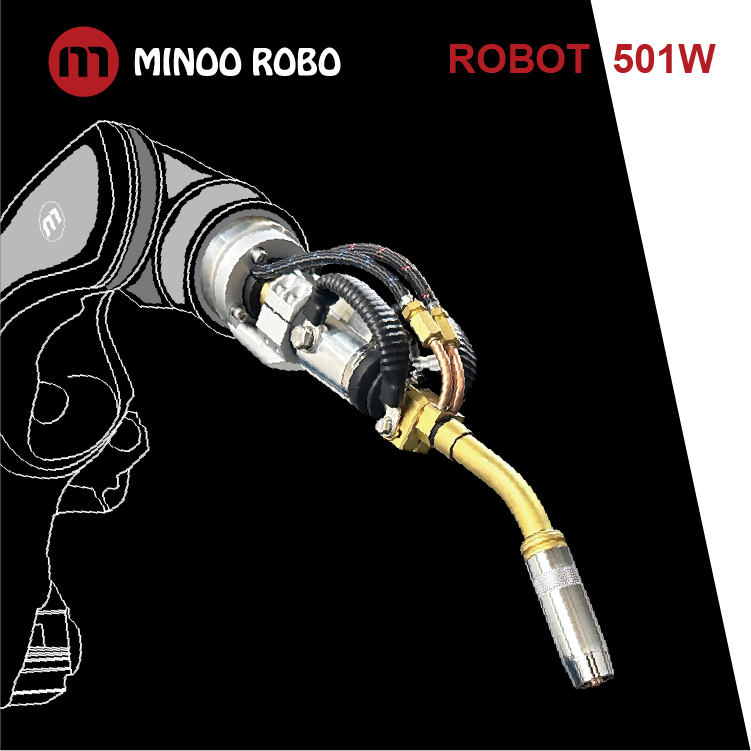
The early warning systems of developing problems that may result in collisions include predictive maintenance tools, such as IoT sensors, thermal monitoring, and vibration analysis. Within the scope of follow-up of consumable lifespans and the observed performance deterioration, the maintenance teams are able to plan the replacement tasks in advance to avoid the failures. This offensive mechanism will counteract the impromptu performance problems that are usually the precursors of collision factors.
In collision prevention measures, special concern should be given to wire feeding system maintenance. The instability of arcs and the quality of the weld could be the results of the poor feeding of the wire, which might make the operators take some manual actions during the working process, which predisposes the occurrence of collisions. Periodic checking of liner conditions, drive roll performance, and tension settings assists in keeping performance of wire feeding constant. The drive rolls and tension settings are matched with the particular type of wire to ensure that the process is not sidetracked by some slipping or deformation of the wire.
Training and Operational Excellence
One of the important aspects of collision prevention in robotic welding systems is represented by human factors. The training programs should include not only the basic training on how it works, but also the ability to recognize a collision, emergency procedures, and the maintenance procedures. Operators should be aware of the abilities and the weaknesses of collision detection systems including the correct setup of the system and verification of the systems.
The training should focus on the need to keep the workspaces clean, the fixtures aligned and the parts presented consistently. Even the most developed robotic system does not have the ability to make any adjustments to the poorly aligned or inconsistently presented parts, and any efforts to do it, usually lead to the collision scenarios. One of the best ways of avoiding collisions due to workpiece variability is to invest in strong, repeatable fixturing.
The maintenance staff members will need to be trained on collision damage evaluation and repair protocols. This comprises of the correct methods of neck replacement, TCP recalibration and sensor check. The possibility to perform inspections and take corresponding corrective measures after collisions assists in averting the appearance of similar problems and provides the full recovery of the system.
Comprehensive Risk Assessment and Safety Integration
An effective collision prevention is based on a systematic risk evaluation. Such evaluation should not be based only on the mechanical risks that are evident but also on the environmental aspects that may lead to collision. The welding arcs, sparks, fumes, and pinch points are all the possible hazards that might indirectly cause collisions by impacting the visibility of the operators or performance of the systems.

According to thorough risk analysis, the safety functions are to be incorporated at various stages of the robotic system. Emergency stop buttons should be well located and constantly checked. Walls and alert systems are physical barriers that ensure that there exist safe working distances between man and robot in operation. Environmental monitoring systems will be able to notice the condition that may lead to the increase of collision risks, e.g., too much fumes that will obscure the sensor or may influence the judgment of operators.
The implementation of safety systems ought to be in a layered approach, whereby the protection mechanisms are multiple and independent. Such redundancy is to prevent the case of failure or bypassing of one system and there are other safeguards in place. Scheduling of regular testing and verification of the safety systems should be a part of the maintenance schedule with special focus on the systems which have not been used recently.
Post-Collision Recovery and System Restoration
Although the best prevention measures have been made, collision events can still take place. An effective recovery plan would guarantee a low downtime and total system recovery. The process starts with the full damage evaluation, i.e., the visual inspection of the torch, confirmation of the mechanical parts, sensor system testing.
The restoration of the system should involve full TCP recalibration, shock sensor reset and the confirmation of all collision detecting settings. Reviewing of the programming must also be considered and possible changes might be made depending on the lessons learnt during the collision incident. Before starting the system it should be checked to ensure any changes made to fixtures, workpieces or environmental conditions that caused the collision are corrected before restarting the system.
Recording of the occurrence of collisions with the root causes and corrective measures undertaken will be useful data to be used in the enhancement of prevention measures. This is information that should be distributed in the organization to be able to avoid such incidences in other systems or locations. The recovery plan must end with thorough testing in controlled conditions and then the full production should resume.
Future Directions in Collision Prevention Technology
Collision prevention technology is ongoing to develop faster, and there are multiple promising developments in the future. Collision detection algorithms are being developed with artificial intelligence and machine learning algorithms, allowing more complex pattern recognition and prediction. Such systems are able to learn about the near-miss events and alter the sensitivity and response strategies.

High materials engineering is also helping to produce stronger torch parts that can survive light-weight hits without much damage. Self-repairs and modular architecture that allows quicker replacement of components are minimizing the impact of collision. Detection is being increased by better sensor technology, such as better resolutions in vision systems and better responses by force-torque sensors, and the false positive rate is decreasing.
Another important innovation is the implementation of digital twin technology. Manufacturers can simulate crash cases, validate prevention measures, and system designs by building virtual representations of physical systems which update in real-time whilst avoiding the damage to actual equipment. There is also improved training programs within this type of technology and remote troubleshooting and support.
Conclusion: Building a Culture of Collision Prevention
The problem of collision damages in robot welding torches could not be prevented only by technical solutions but also demanded a radical change in the working philosophy. An effective collision prevention is based on the fusion of cutting-edge technology, regular maintenance procedures, extensive training options, and a culture of safety and reliability. On considering collision prevention as a continuous process instead of a one-time implementation, the manufacturers will be able to design robust systems which will change over time as the circumstances evolve and optimize their performance.
The best practices acknowledge the fact that collision prevention is overlapped by almost all areas of robotic welding activities including system design and programming, as well as the routine maintenance and training of operators. With equal attention paid to each of these aspects and by making it a part of the prevention system, manufacturing firms can realize the twofold goal of optimizing the productivity and reducing the downtime. The benefits of the investment in the holistic collision prevention are not only the decrease in the equipment damage and costs of its maintenance, but also the improvement of the product quality, operator safety, and the system reliability.
Since the technology of robotic welding is developing, the rules of successful collision prevention will stay unchanged: a rigorous plan, constant control, active maintenance, and ruthless attention to detail. Following such principles and modifying them to the changes in technologies, manufacturers will guarantee the maximum efficiency of their robotic welding systems and the highest safety and reliability level. The process to collision free robotic welding is not only a technical undertaking but also a window of opportunity to redefine manufacturing excellence to the automated era.