
When it comes to the new technology in metal fabrication and welding, the actual price of TIG welding equipment cannot be determined by simply glancing at the price tags. This detailed examination shows that the entry-level version of TIG welding equipment costs about 500 dollars, but on the other hand, more advanced equipment may cost as much as 5,000 dollars, and the overall cost of investment may include not only the machine itself but also all the necessary accessories, operational costs, and the cost of maintenance.

The welding market of 2025 is showing a distinct pattern of multi-process options and technological integration, and therefore strategic buying choices are more important than ever to hobbyists and professional welders in search of the best value and performance.
Understanding TIG Welding Fundamentals
The Tungsten Inert Gas welding is the highest level of accuracy of metal joining technologies. Contrary to other welding techniques which emphasize speed or ease, TIG welding is aimed at providing outstanding control and clean high quality welds. This is done by using a non-consumable tungsten electrode to form the arc with separately fed filler material introduced manually. The whole process is carried out in an inert gas chamber usually argon that shields the molten pool of the weld against atmospheric impurities.
The basic attractiveness of TIG welding is that it is capable of welding several types of metals such as stainless steel, aluminum, magnesium, and exotic alloys. The ability of this type of welding has rendered it invaluable in industries where the quality and appearance of the welds holds great importance like aerospace, automotive customization, and artistic metalwork. The operator needs a lot of skill in the process since it involves the synchronization of the torch, filler rod, and foot pedal control at the same time and keeping the arc length and travel speed constant.
Current Market Pricing Structure for TIG Equipment
An analysis of the 2025 welding equipment market shows that it has a stratified pricing system that meets the needs of various users and budgets. TIG welders at the entry-level designed to be used by hobbyists and other occasional users are usually priced between $500 and $1,500. These machines usually offer simple DC TIG functions that are acceptable when working with steel and stainless steel. The mid-range professional models are sold between 1500 and 3500 USD and they normally have both AC/DC capability needed to do aluminum welding with other features such as pulse welding and better arc stability.
Industrial-grade TIG systems are sold at a higher cost of between 3,500 and much above 5,000 dollars at the high end. These machines are very advanced with programmable settings, advanced waveform control and strong construction capable of running 24 hours without failure in harsh environments. Pricing difference is based not only on the raw power output but also the complexity of control systems, components of durability and other features that add productivity and quality of weld.
Key Factors Influencing TIG Welder Costs
There are a number of key issues behind high price differences that can be found in the TIG welding market. Power capacity is one of the leading cost drivers, and machines with a higher amperage output have a high price. The capability of a welder to work with thicker material or to be able to support the arc with smaller currents in case of thin material has a great influence on the complexity and cost of its manufacturing.
Another significant cost element is the technological features. Simple TIG machines can have simple on/off controls and manual control of amperage, and more advanced models can have digital controls, memory settings to store commonly used settings and more complex pulse welding features that enhance control of heat input. A typical addition to the base price of DC-only machines is the addition of AC capability to allow aluminum welding.
Pricing is also influenced by the consideration of the quality of building and durability. Machines used in industries have more durable components, better cooling mechanisms and better resistance to environmental hazards such as dust and moisture. These construction differences represent longer service life and reliability in challenging applications but at a high initial cost.
Comprehensive Setup Costs Beyond the Machine
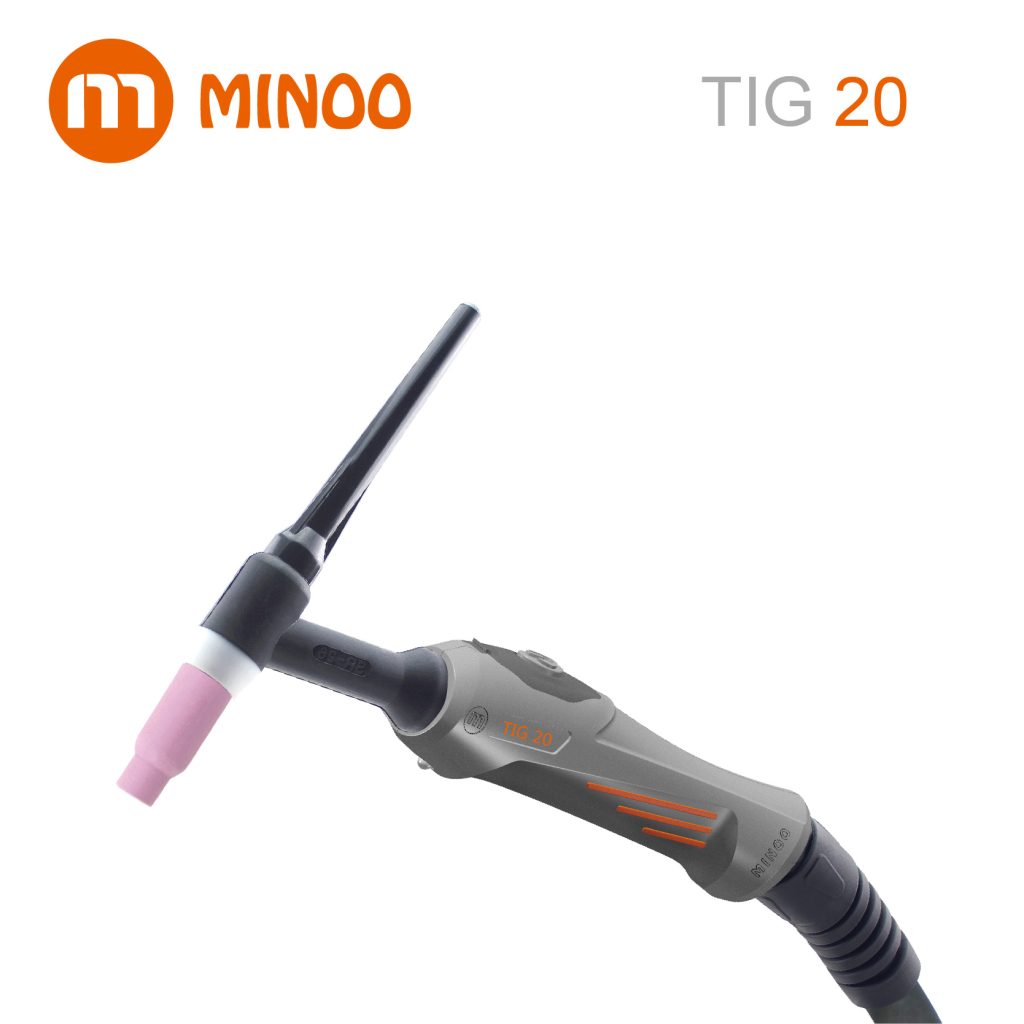
An effective TIG welding budget should take into consideration many other ancillary costs on top of the welder itself. The source of power is just one of the parts of a functional system. Basic tools such as a TIG torch and a TIG torch can cost between 100 dollars to above 500 dollars in water cooled professional tool. Ground clamps, cables and connectors are also an additional cost of $100 to 300 depending on the quality and the length.
Another major cost is gas equipment. The price of a regulator and flow meter device is usually between 75 to 200 and gas cylinders are either rented or bought at a price of 150-400 based on size. Consumables are also a continuing cost, tungsten electrodes, filler rods, and gas refills all add to the operating budget.
Safety equipment is an investment that cannot be compromised. A good auto-darkening welding helmet is between 100 and 500 dollars and the other equipment, clothing, gloves and respirators will cost an extra 200 to 600 dollars to the start up price. Infrastructure needs in the workshop may be electricity upgrades to machines with increased amperage, ventilation, and suitable working surfaces.
Technological Advancements in 2025 TIG Equipment
The welding equipment market in 2025 is characterized by an impressive technological advancement that determines the performance and the cost. Digital integration has been more normalized and most mid-range and high-end TIG welders have touchscreen interfaces, wireless interfaces and can be connected to mobile applications to monitor and control parameters.
Another major technology is that of waveform control which enables accurate control of the electrical properties of the welding arc. This allows a greater control of heat input and stability of arcs and performance on difficult materials or joint designs. Advanced pulse welding capabilities have gone beyond frequency adjustment to allow adjustable background current, peak time and pulse shape parameters.
Multi-process has become a trend and most manufacturers have introduced machines which carry TIG, MIG and stick welding capabilities in one machine. Although these multi-purpose systems usually cost more than a dedicated TIG machine, they provide very attractive value to users who need the flexibility of a wide variety of welding processes.
Brand Considerations and Market Positioning
The 2025 welding equipment market is characterized by brand positioning on various segments of prices. The well-established industrial manufacturers, such as Miller and Lincoln Electric, are still very strong in the high-end segment and focus on reliability, durability, and support networks. These are brands that usually sell at the highest rate in every category yet have a reliable performance in high-demand applications.
Value-based brands have become a huge market share with the feature-based machines at a competitive price. Such companies as YesWelder and Tooliom have managed to tap into the hobbyist and small business markets with machines that include much of the added value of high-end machines. This has been a price war that has led to innovation in all price segments.
New brands emphasizing on digitalization and user experience have brought about new competition to the middle-market segment. These firms have a tendency of using the contemporary production methods and direct to consumer sales patterns to provide competitive prices without compromising on quality. The decision of the brand selection is based on the consideration of initial cost and long-term reliability, service availability, and resale value.
Operational and Maintenance Cost Considerations
In addition to the initial purchase cost, there is the cost of continued operation of TIG welding that has a huge influence on the overall cost of ownership. Depending on the efficiency of the machine as well as the pattern of use, electrical consumption may differ significantly. Contemporary TIG welders that use inverters are generally more energy efficient than older models that used transformers and can save hundreds of dollars per year in business.
Consumable expenses are a large recurrent cost. Tungsten anodes must be replaced or reconditioned periodically, and tungsten anodes with lanthanated or ceriated tungsten being more expensive than thoriated anodes. The cost of filler metal will be dependent on the type of material and consumption rate, where the stainless steel and aluminum filler rods will cost more than the mild steel counterparts.
Another current cost is shielding gas, of which argon is the most used in TIG welding. The rate of gas consumption is determined by the settings of flows, the weld time and efficiency practices. Routine cleaning or replacement tasks such as filters, periodic cleaning or replacement of torch parts and periodical calibration of electrical systems are required as well.
Skill Development and Training Investments
Human factor is one of the critical cost factors that have not been put into consideration in the budget planning of TIG welding. TIG welding requires a lot of practice and skill development, unlike other types of welding that a beginner can learn within a short period of time. The learning curve is not only a technical skill but also the ability to build the coordination and muscle memory that allow a consistent performance.
The choices of formal training include courses at a local community college at a few hundred dollars, or intensive programs in welding at several thousand dollars. Although self-education with the help of online materials and practice is a cheaper option, it is more likely to take more time and has a risk of resource waste in the course of the development of the new skills.
The opportunity cost is the time spent in acquiring the skill which should be included in the total budget calculation. In the case of businesses, it is not only the duration of training of the welder, but also possibly a lower level of productivity in the learning period. The investment in skill development is rewarded by the quality of the welding, a decrease in the rework and the ability to work on the complex projects.
Application-Specific Cost Considerations
Depending on the intended uses and applications, TIG welding is quite expensive. Hobbyists who are automotive project or artistic metalworkers usually have other budget concerns than manufacturing processes or building practitioners. The knowledge of these application-specific factors assists in the proper choices of equipment.
Occasional users who work on a variety of projects will usually learn the value of versatility more than sheer power or specialization. These users would put more emphasis on multi-process machines or TIG welders that are all rounded to work with a variety of metals and thicknesses. The budget must be able to fit the widest possible range of possible applications, and not to fit a single application case.
The considerations required in production environments are different and reliability, duty cycle, and serviceability have first priority over the initial cost. The manufacturing processes can generally support the high-end equipment investments in terms of lower downtimes, quality production schedules, and long service under the conditions of continuous use. The computation of costs changes to the purchasing price alone to total costs per hour of equipment operation during its life cycle.
Special applications of exotic materials or other critical structural elements or code-mandated work can have specific machine capabilities that impact budget requirements. These could be higher pulse capabilities, fine adjustment of current, or a certain certification that could reduce the equipment choice and may add to the price.
Future-Proofing Your Investment
The decisions made by strategic purchasing must not be based on current needs only but future expectations as well. The rate at which technology has developed in welding equipment is so high that the current high-quality facilities might be the standard of the next generation. Nonetheless, to predict certain future needs, it is necessary to balance the capabilities that can be needed in the future with the danger of paying features that will not be used.

Modularity and upgradeability are two significant factors in terms of future-proofing investments in welding equipment. The upgrade paths of some manufacturers can provide an opportunity to add a feature such as pulse welding or even more compatibility to the process without changing the entire machine. These alternatives can be flexible and allow controlling preliminary costs.
The trend in the industry towards automation and digital integration is that the features of connectivity and compatibility with the new technologies can become more important. Although it is unpredictable which applications to use in the future, it is possible to choose the equipment of manufacturers with a high level of innovation history and willingness to continue to support the product, which will give an opportunity to avoid premature obsolescence.
There is also the consideration of resale value as a factor in calculating future-proofing. The equipment of good manufacturers with good brand name will normally have good resale value which may compensate the high initial cost in the event of the need to upgrade to newer technology.
Making Informed Purchasing Decisions
The dynamic TIG welding equipment market is a complicated market that needs a systematic decision-making process. The first step should be to specify requirements in several dimensions clearly: which materials should be welded, what thicknesses, what quantity will be produced, what level of skills is required, what infrastructure is available. The requirements analysis is a base to the proper selection of equipment.
Studies must be done not only on the basic specifications but also on practical reviews, user experiences and professional reviews. Although manufacturer specifications give handy base data, actual performance features such as arc stability, usability, and sustainability under continuous use are what usually distinguish otherwise similar machines.
TCO computation must include not just the purchase cost but also operational cost, maintenance cost and possible productivity effects. In the case of business applications, such calculations may incorporate financing expenditure, taxation as well as depreciation plans that influence the actual economic impact of the investment.
Vendor selection is not just choosing based on product but also support facilities, warranty and availability of parts. In professional use, local dealer support may be indispensable in problem-solving, maintenance or even downtime reduction. The purchasing decision is a long term collaboration with the equipment supplier that will not limit itself to the first purchase.
Conclusion: Strategic Investment in Welding Capability
TIG welding is one of the major investments that go way beyond the prices of equipment at the start point of purchase. The 2025 market is available with products ranging between 500 entry level machines and 5 000 and above industrial systems, and the actual cost including accessories, consumables, training, and maintenance costs will be a part of it. This complicated landscape can only be managed successfully by a close consideration of the present needs as well as the needs in the future that must be balanced with the budgetary limits and performance expectations.
The most cost-efficient one is to align equipment features with the particular application needs instead of achieving maximum specifications. Mid-range machines with balanced features, reliability and performance seem to be the best value proposition to many users. The changing technology environment has been providing better functionalities with affordable prices and this has ensured that advanced TIG welding technology is more than ever before available to wider user groups at accessible prices.
Finally, the TIG welding machines are not just a tool to buy but a potential ability investment. The correct choice of equipment, combined with the right development of skills, opens the opportunities of creative expression, production excellence as well as professional growth. With a thorough grasp of the technical needs and the economic aspect of the purchasing decision, all levels of the welders can make quality choices, which provide long-term value and performance satisfaction.